


Hi, I’m Nicolas, Head of Research at Vsquared Ventures, and I’ve been writing this newsletter for almost ten years. Today, I’m giving it a new name: Drift Signal is becoming The Arden Letter.
I’m making this change because I think the West is at a turning point. Neither Europe nor the US is in a particularly strong position at this moment, and the transatlantic relationship that underpinned the Western order for decades is under more strain than at any point in my lifetime. European trust in the US has fallen to historic lows in recent polling, while disagreements over trade, security, and the future of the alliance have become much harder to ignore.
At the same time, China has spent years building industrial capacity at a scale that the West has largely stopped trying to match. It matters a great deal because in today’s world, technology is no longer just about software and venture capital. Chips are foreign policy. Compute is increasingly an energy question. Exchange rates shape industrial strategy. Capital flows determine where companies get built. And the ability to manufacture things, from cars and robots to drones and batteries to space launchers and advanced weapon systems, is becoming a strategic asset again.
This is why I think business as usual is no longer enough. After years of writing about technology, I’ve come to think that the most important questions are increasingly about what sits behind technology itself: who has the capital to build, who retains the required industrial capacity, how geopolitical interests align, and whether we can, as the West, work together to put those things to use.
My starting point is a macroeconomic observation: Europe exports its savings to American financial assets, while America has exported much of its manufacturing base to China, leaving the Atlantic economies rich in capital but short of the capacity to build. My purpose here is to trace how that system works, from capital flows and trade imbalances to industrial strategy, and to argue that Western renewal depends on allied scale: pairing American capital and innovation with European process knowledge and factory depth, and treating them as one integrated industrial system.
That means bringing macroeconomics, geopolitics, and diplomacy back into the way we think about technology and capital allocation. It also means studying China, not simply as a competitor or threat, but as a source of practical lessons in statecraft and industrial development.
That is what The Arden Letter is about. It is written for investors, executives, and policymakers making long-duration capital allocation decisions on both sides of the Atlantic. I’ll cover the news when it matters, but mostly I’ll focus on the larger forces behind it through original frameworks, historical depth, and conversations with experts and experienced practitioners. If you allocate capital, set industrial strategy, or shape policy across the Atlantic, this letter will give you the frameworks and evidence to make those decisions with the full picture in view. Read along 👇

1️⃣ For as long as I can remember, America has been omnipresent in my European life.
On the one hand, I’m as French as you can get: my maternal grandparents were pharmacists in the rural Pays de Caux near Le Havre, Normandy. My parents were music educators, working in the public sector. My very first trip to America was in 2007, when I was already 30. We went there with my newlywed wife to visit a dear friend of hers and essentially spent our honeymoon between Washington, DC, Philadelphia, and New York City. We had a great time in the hot American summer!
On the other hand, even before I got to travel there, America was present in many dimensions of my life, starting with the music I listened to and the movies I watched—always in English with French subtitles, being from an intellectual family. Then, during my early teenage years, I started to get interested in politics. And by coincidence, for my 15th birthday in 1992, my mother subscribed to a relatively new French outlet, Courrier International, which consisted of translated versions of landmark articles from media all over the world, primarily from the US.
This, I think, really changed my life. Being interested in politics, I started following the US presidential campaign of that year, witnessed the rise of Bill Clinton, and was very surprised that this unknown, young guy from Arkansas could beat George H.W. Bush, the heir to the super-popular Ronald Reagan and the glorious winner of the first Gulf War. That really intrigued me: not only was America important, which I already knew, it was also much more nuanced and interesting than I had ever thought.
From then on, I became a voracious reader of everything related to the US, reading essentially in French for a while, which was limiting, but then switching to English sometime around 2000, as my mastery of the language had already improved quite a lot. By then, I knew a lot about US domestic politics and had an extensive mental map of all the important people connected to the Clinton administration. One of them was Pamela Harriman.
2️⃣ Pamela Harriman was born Pamela Digby in 1920 and grew up in Dorset, England—British through and through.
Ambitious and eager to see the world, she came of age at a time when the career opportunities available to women were still very limited. She then embarked on an incredible journey. In 1939, she took a job at the Foreign Office in London and, that same year, married Randolph Churchill, Winston Churchill’s son. During the war, she found herself at the center of the Churchill family and British political life and became an important intermediary between British and American figures at a time when the US was still deeply reluctant to enter the war.
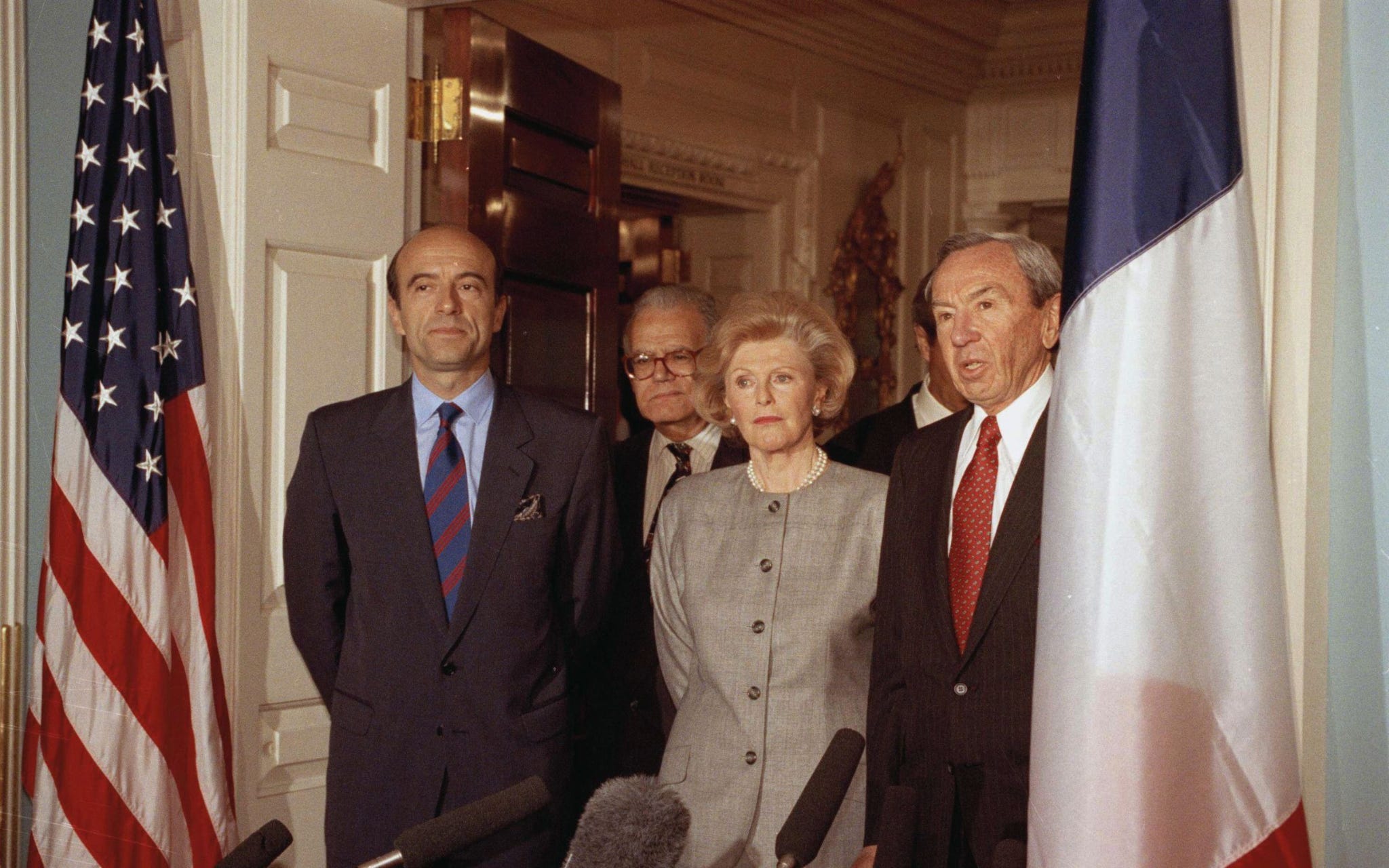
After the war, she divorced Randolph and moved to Paris, where she built a new life as a journalist and political networker. She eventually moved to the US, where her 1971 marriage to W. Averell Harriman connected her to the Democratic establishment. A former governor of New York and one of the central figures in American foreign policy, Harriman was also a wealthy businessman and a major figure in Democratic politics. Through him, Pamela, now a US citizen, became increasingly involved in the party and eventually a close supporter and fundraiser for Bill Clinton.
In 1993, Clinton appointed her Ambassador to France. Almost overnight, her name was all over the French media, as she took on a role at the center of transatlantic affairs, from international trade negotiations to the war in Bosnia.
By that point, as a French person passionate about the US, I had to learn more about her. But sources on Pamela were still scarce. The Internet was only just beginning, and only much later, years after her death in 1997, would books dedicated to her appear, including the excellent Kingmaker by Sonia Purnell. So at the time I ended up learning much more about her late husband, Averell.
3️⃣ Just like his wife, W. Averell Harriman really was larger than life.
It’s difficult to remember everything I learned about him back in the 1990s, except that he had been governor of New York, had presidential ambitions but never made it, and was very wealthy.
It was only later, through The Wise Men by Walter Isaacson and Evan Thomas, an inspiring book about US diplomacy from World War II to the Cold War, that I learned about the many dimensions of Averell’s life and how deeply embedded he had been in the transatlantic relationship:
He was the heir, with his brother Roland, to a railroad empire. He saw the domestic peak of building great infrastructure, then went international, building a merchant-banking business that became Brown Brothers Harriman. In the 1920s, he was doing business in the USSR, buying manganese concessions and building relationships with Soviet leaders.
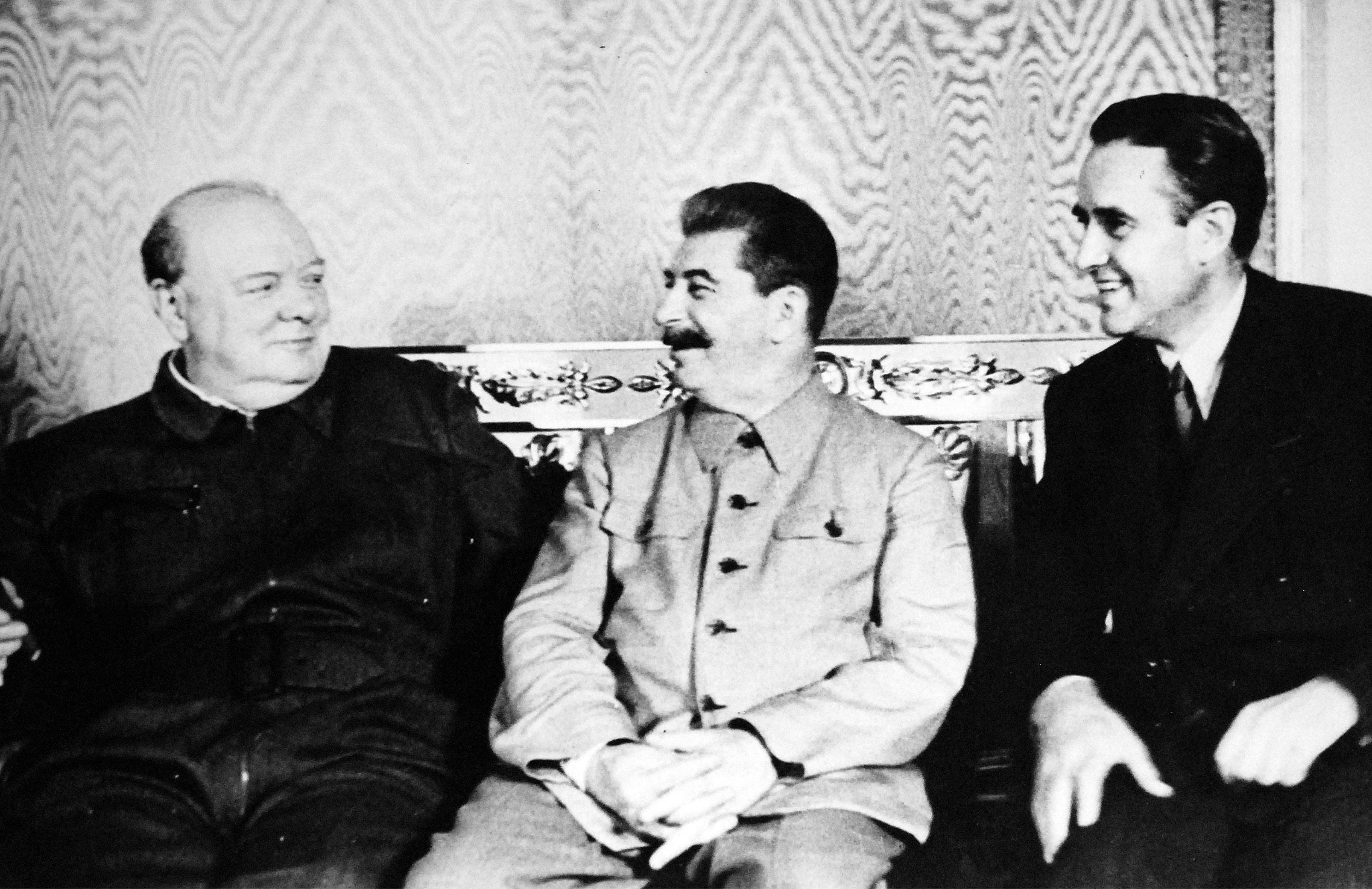
By World War II, he became the American official responsible for overseeing Lend-Lease in London, the program through which the US supplied Britain and its allies with military equipment and other goods. He then became ambassador to Moscow before serving as Commerce Secretary and taking charge of implementing the Marshall Plan in Europe in 1948.
After his political career as governor of New York, he returned to diplomacy, working on the Limited Test Ban Treaty in 1963 and the Paris peace talks in 1968.
What’s striking is how comfortable Averell was moving between finance, industry, politics, and diplomacy. Today, these are largely separate careers, staffed by specialists. Back then, the boundaries were more porous. You could be involved in all of them at once.
Then there is another aspect of his career that I like a lot: his willingness to get close to rivals, in his case the Soviet Union, and study them up close, without illusions. The point was not only to understand them better but also to draw lessons that could be applied at home. His years in the USSR, first as a businessman and then as a diplomat, shaped his view of a more connected world in which you had to work together to understand each other, deliver peace, and build great things.
As I asked in 2020, where are today’s “Wise Men and Women”, those people who know the world and bridge the gap between finance, industry, and diplomacy? And as I reflect now again, can The Arden Letter be an attempt to work in that same register?
4️⃣ What previous generations fused, we later separated.
What was Averell’s practice? Essentially, it was turning capital allocation, industrial strategy, and geopolitics into one system.
A good example was the Marshall Plan, a remarkable exercise in delivering both diplomatic and economic results. From 1948, around $13 billion was allocated by the US government to rebuild Western Europe, equivalent to roughly $180 billion today. The money helped European countries buy food, fuel, raw materials, machinery, and other goods needed for reconstruction, including from the US. But the aid came with an important condition: European countries had to work together on a common recovery program. American aid was conditional on pan-European cooperation.
The thinking behind that cooperation was already taking shape in early 1947. George Kennan’s Policy Planning Staff argued that European governments should take responsibility for developing a recovery program of their own, with the US supporting it. William Clayton, the senior State Department official working on European economic affairs, was making a similar case: Europe could not recover while its economies remained divided into separate national compartments.
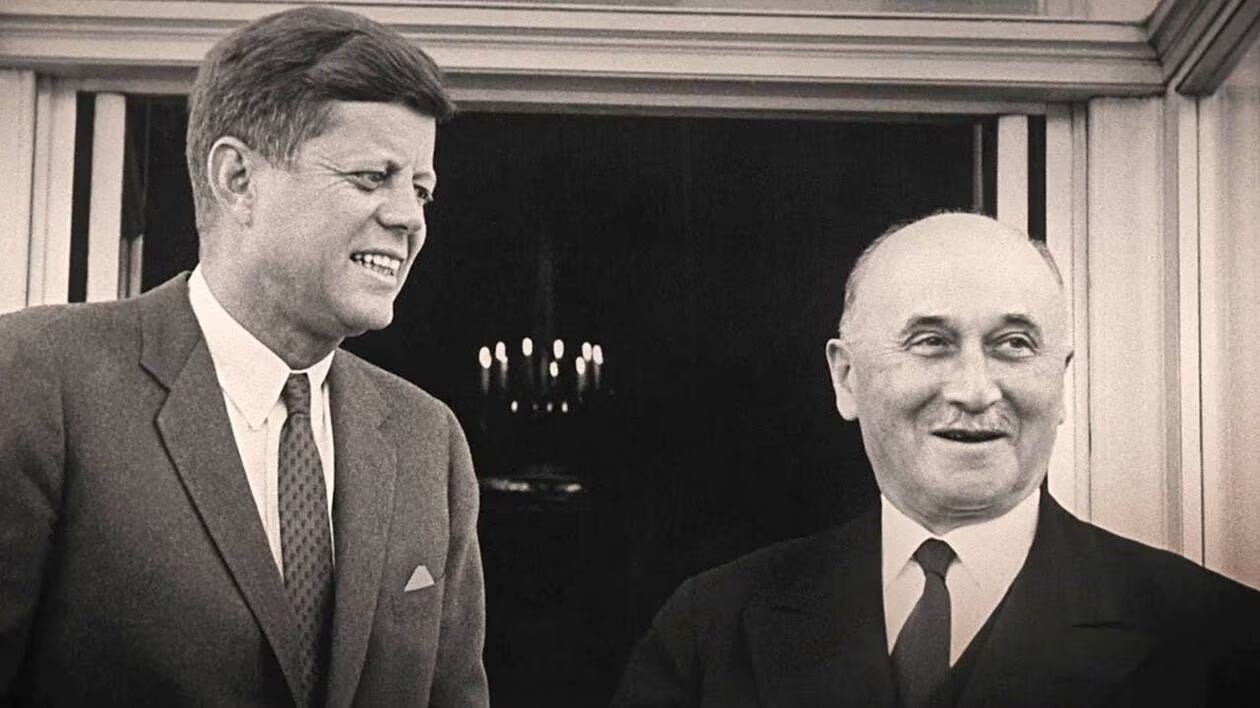
Then a Frenchman, very much Europe’s equivalent to Averell, helped turn that thinking into institutions on the ground. Jean Monnet had been a cognac dealer in America, a practical organizer, and an internationalist who had spent much of his life moving between business, diplomacy, and government. During the war he worked closely with the Allies, and after the war he returned to France as Commissaire au Plan, in charge of planning the country’s reconstruction.
He then helped French PM Robert Schuman develop the idea of pooling French and German coal and steel production under a common authority. The European Coal and Steel Community was established in 1951, bringing together France, West Germany, Italy, and the Benelux countries. The project was economic, industrial, and geopolitical at the same time: rebuild production, integrate markets, and make another Franco-German war materially harder to wage. It became one of the foundations of what would eventually become the European Union.
What those efforts, by people like Harriman and Monnet, helped deliver was decades of peace, prosperity, and stability across the West. And that stability eventually produced a strange side effect: when the world is stable, you can specialize.
The disciplines thus started to separate. Finance became one silo, technology another, foreign policy a third. I think that specialization made sense in the relatively stable world of the post-war boom and later globalization. But today, such specialization is becoming a luxury we can no longer afford. The old order is collapsing before our eyes, and rebuilding the West’s productive capacity requires us to put those pieces back together into a system.
By the way, that demand has already surfaced in politics. After all, as stated by Sinéad O‘Sullivan, the current US administration was elected in part because voters wanted someone to reconnect the pieces—to restore coordination after decades in which finance, industry, and government drifted into separate orbits. The methods are imperfect, even contentious, of course, but the intent and aspiration are unmistakable.
In short, what both Harriman and Monnet understood, and what we have since forgotten, is that capital, production, and diplomacy are not separate systems when the objective is to build in the face of adversity.
5️⃣ Macro and geopolitics are becoming part of the new language of technology.
I’ve been working in tech for more than 15 years and writing this newsletter for almost 10. Most of that time has been spent on micro questions: startups, products, venture capital, and how to build successful tech companies in Europe. I didn’t have to think too much about geopolitics, and I didn’t have to think about macroeconomics at all.
But over the past few years, I found myself having to think about a much wider set of questions. The technology world was no longer something I could understand on its own terms. In fact, so much has changed since 2021 that, I must say, it has been a humbling experience. About that, let me make a few confessions:
First, as a disciple of Marc Andreessen, I believed that software would eat everything. I now believe that manufacturing is eating software back and that the ability to build tangible things is at least as important as mastery of software.
Second, I long dismissed deep tech as “a consolation prize for European investors who couldn’t compete in software.” The idea was that Europe had to excel at building software companies and that as long as it was taking refuge in less rewarding deep-tech ventures, it couldn’t make it in software. Well, now I work for a deep-tech VC firm, which tells you everything you need to know about how much I’ve changed my mind.
Third, I really enjoyed the synergy phase of the 2010s, when small startups were turning into tech giants and changing the economy as a result. But I now think we’ve reached the maturity stage, or the late cycle, and need a new playbook.
Fourth, for a period of time, like many people in the West, I was dismissive of Chinese tech. I am now convinced that China is racing ahead in many segments of technology, including AI, and that there are many things we in the West should try to learn from it when it comes to building technology companies and the infrastructure they require. Current evidence suggests that the US-China gap in frontier AI has narrowed dramatically, while China has also built major advantages in several physical technology supply chains.
In short, my current thesis was reached through multiple corrections over nine years. Now I need to decide how to act on it and how to make the case that the West’s capacity to build technology companies and create economic value depends increasingly on macro and geopolitics. Until around 2021, my technique for getting non-tech people interested in tech was to talk to them about economic history and institutions. Today, the best way to get those same people interested is to explain how macro and geopolitics directly affect our capacity to build technology companies and create economic value, with China offering a different playbook from which we can learn.
In short, Drift Signal covered the period when I was updating my mental model of the tech world. The Arden Letter is about what comes next: looking beyond technology itself to the capital, industrial capacity, and alliances that make it possible to build.
And where does the name “Arden” come from? I have two references in mind. One is Shakespeare’s As You Like It, in which the Forest of Arden is the place where the exiled court retreats, regroups, and sees more clearly before returning. The other is more direct: the name has a connection to the Harrimans, which I’ll come back to at the end ⏱️
6️⃣ Why China is the reference point for the coming period.
There are multiple reasons why the West cannot go back to what it was in the post-war period: the Soviet Union no longer exists; Europe has been fully rebuilt, and the post-war reconstruction effort has long since run its course; and we are now in a different techno-economic paradigm and at a different stage of it. Specifically, we are no longer in the synergy phase of oil, automobiles, and mass production, but in the maturity phase of the age of semiconductors, computing, and networks. None of the recipes that worked in the 1960s should be expected to work in today’s world.
The most important reason, however, is that China has transformed and developed its economy far beyond what anyone would have thought possible. China was long an impoverished nation, essentially walled off from the world until the end of the 1970s. Now it has half of the world’s shipbuilding capacity, a large majority of the market for lithium-ion cells, and an end-to-end hold on the solar supply chain. It is the world’s largest producer and exporter of electric vehicles and a leader in rare-earth processing, drones, and robots. Even in AI, the gap has narrowed, with Chinese open-weight models now competing at the frontier. As I wrote last year, China has outmanufactured the West, and that makes the world a very different place from the 1960s.
Of course, the West still leads in areas such as chip design, aerospace, biotech, and software in general. But for the first time in a century, it faces a rival that is plainly superior in critical industrial domains, one that not only floods the world with advanced products made at home but also wants to secure technological dominance across many fields and has geopolitical ambitions in Asia, the Middle East, Africa, and perhaps beyond.
I draw two conclusions from this:
The first is that the global rule-based order was not designed to accommodate China, for the simple reason that this behemoth did not exist in the years after the war. In fact, much of the turmoil shaking the order today can be explained by the rise of China and the imbalances it has imposed on the rest of the world. The rise of China therefore raises a question the post-war order was never designed to answer: how should a system built around Western economic dominance accommodate a peer-scale industrial power outside that system?
The second conclusion is that China proved something in the process: when an entire bloc directs capital towards production for decades, in a coordinated way, capacity follows.
The West arguably has more capital of all sorts than China, but we have to admit that the way we direct that capital does not translate into as much capacity. That mismatch is at the core of this newsletter, and I believe it gives all of us in the West a clear mandate: we should all learn from China. We can treat it as a threat, a rival, a spectacle, or anything else we want, but whatever attitude we choose should not stop us from recognizing what matters most: China is the richest source of lessons for anyone who wants to restore coordination and rebuild capacity in the West.

7️⃣ China has a lot to teach us, most of all about how capital meets factories.
There are two reflexes we have in the West when it comes to China. The first, which I myself practiced for a time, is denial; the second is confrontation as a substitute for thought, essentially presenting China as the universal bogeyman to justify many stupid decisions on our end.
There’s a third posture, though, one we could call the Harriman method. Again, Averell went to Moscow in the 1920s as a businessman, negotiating a concession to operate the Chiatura manganese mines in Georgia and learning how the Soviet industrial system worked from the inside. He then came back in 1943 as US Ambassador. In both cases, he didn’t have to admire the Soviet system to study it closely and draw lessons about what was working and what wasn’t. His approach was straightforward: study up close, have no illusions, see if there are things to do together, and extract lessons for home.
Now imagine if all of us Westerners, collectively, did the same with China—if we learned from China as avidly as the Chinese once learned from us, under the leadership of Deng Xiaoping and later Jiang Zemin. Here are a few things we would learn:
Developing an economy during a period of technological change requires following a specific playbook, documented by many, including Joe Studwell in How Asia Works: empowering workers as the economy industrializes, building competitive manufacturing through export discipline, and retaining domestic capital through financial repression.
Allocating capital to build industrial capacity requires preventing investors from always chasing short-term returns through financial assets. As the US demonstrates at the moment, you can have a booming stock market, or you can reindustrialize at scale, but you definitely can’t do both at the same time.
If capital allocation leaves strategic sectors underfunded, the state shouldn’t hesitate to intervene and redirect capital towards industries it considers strategic, much like a venture capital firm. That is what China has been doing through its successive five-year plans, and I call this model “Middle Kingdom Ventures”.
Excelling in manufacturing requires leaving behind a romanticized view of the sector, as if it were still Detroit in the 1950s. Today, China excels at manufacturing because it has standardized it around the Electric Tech Stack and is increasingly embedding AI across automated value chains—meanwhile, the West remains obsessed with ‘God-in-a-box’ AGI.
Every lesson above was made possible by China’s specific conditions—single-party authority, state-directed capital allocation, mass subsidization of strategic industries, and what amounts to a whole-society approach to industrial development. The West operates under different constraints. The question is which of these mechanisms can be translated into our own context.
And so learning from China doesn’t mean applying its playbook to the letter, nor does it mean endorsing its values or its regime. China’s context—its political structure, its control over capital, and its tolerance for suppressed consumption—cannot be transplanted. What can be transplanted, though, is the underlying logic: that capacity follows when capital is directed toward production with sustained intent, and that the West needs to find its own institutional means of achieving the same discipline. What matters more is the method and its byproduct: as you read, talk to interesting people, and visit factories, ports, and industrial parks, you embrace what effectively makes manufacturing so challenging. Production can only be understood and improved by standing next to it and seeing it with your own eyes.
Everything above reduces to one skill the West has lost and China has mastered—making capital meet factories. What remains to be settled is whose capital and whose factories.

8️⃣ The West can only succeed through allied scale.
There’s something in finance known as a “carry trade”: borrow money at a cheap rate, invest it where returns are higher, and pocket the spread. That’s a carry trade.
The idea at the core of The Arden Letter is that for decades the West has run a carry trade against itself:
Europe provides the funding leg. Thanks to widespread wage restraint, imposed austerity, and suppressed demand (by which we really earn our nickname as “Europoors”), Europe generates surplus savings that it doesn’t know what to do with domestically.
Those savings are then shipped across the Atlantic, where the deep and sophisticated American financial services industry enables them to be invested in US stocks, US bonds, US alternative assets, and specifically US venture capital.
In other words, America is the asset leg in the Western carry trade: it absorbs the world’s savings at low cost, invests them at higher returns, and its financial services industry pockets a share of the difference. You would say, on paper, both sides win—Europe earns yield while America gets funding. But in practice, both legs degrade:
On Europe’s side, domestic businesses are deprived of all that capital that prefers to flee to the US, and those that are still running grow a dependency on exports, which makes them even more eager to push for low wages and suppressed consumption.
On America’s side, the abundance of capital inflows, both from foreign and domestic investors, throws the entire economy into a race for inflating financial assets, which diverts capital from anything having to do with long, uncertain reindustrialization.
The end point in a nutshell is as follows: European capital fleeing Europe ends up inflating US assets rather than funding actual capacity; meanwhile, the massive capital inflows into financialized America result in even more factories closing down and an even larger market share being conceded to China.
Now imagine if the West did it completely differently: collectively, America and Europe have the scale and the capacity to match China, but that would require American capital and innovative power to leverage what Europe actually retained while the US was losing it: factories, engineering talent, and precious process knowledge.
This is the axiom at the core of The Arden Letter, and I’ll state it plainly, because you will read it here many times again:
The West cannot reindustrialize until American capital meets European factories.
In practice, that means American investors, venture capital funds, and corporations directing capital toward Europe’s new industrial base—its deep-tech companies, its defense-tech startups, its precision component manufacturers, its machine builders, and robotics firms—and European institutions making that capital welcome rather than watching it flow into US financial assets by default. The money is largely European in origin anyway; what matters is where it is deployed and under whose operational knowledge.
I call the end state “allied scale,” a concept borrowed from Kurt Campbell and Rush Doshi. It’s about treating the Atlantic as one integrated industrial system rather than two economies running a bad trade against each other. And this gives every future edition of this letter its organizing question. Whatever the news of the week—a tariff round, a defense budget, a chip factory, a pension reform, a stablecoin bill—I will keep asking the same thing: does this move American capital closer to European factories or further away?
Once you start asking that question, you’ll see it everywhere. That’s the point.

9️⃣ Wait a minute: isn’t the transatlantic relationship over and done with Trump and all?
I remember the 2000s. It was a time when the transatlantic relationship was still very much central to our lives. Organizations such as the German Marshall Fund, the French-American Foundation, and many others allocated huge resources to nurturing connections between the two continents. Having specialized in American studies myself, I felt certain that a large part of my professional life would be shaped by that geopolitical given. When Obama became president in 2008, this seemed even more true because he was so admired across Europe, and his arrival in the White House seemed to counterbalance the tensions that had started to appear under George W. Bush, with the ill-advised war in Iraq and the widespread opposition it had encountered across Europe, most notably in France.
Under Trump, the situation is obviously very different. We’ve had the trade war, tensions over Greenland and other geopolitical theaters, and a series of blunt messages from Washington, the clearest being that Europeans will now have to pay for their own defense. Commentators disagree about the causes: some point to growing fiscal constraints in the US, others to America’s ambivalence towards Russia as it wages war against Ukraine, and others still, like Noah Smith, to a cultural drift that makes parts of the American right view Europe with growing defiance. Whatever the mix, the direction is unmistakable: Washington’s commitment to the transatlantic relationship can no longer be taken for granted, under this administration or, quite possibly, the next.
I must say that having read The Wise Men, with Averell as one of its main characters, I can’t really say it makes me more optimistic. Yes, those wise men were firm Atlanticists and had personal connections across the continent with people like Jean Monnet. But from what I remember, the book mostly explains their attraction to Europe as the US patrician class’s reverence for old England and admiration for British figures such as Churchill. And nowadays, the center of gravity of the American elite has moved westward, loosening its ties with Europe and making America much more inward-looking than it was when the Marshall Plan was designed and implemented.
But that shouldn’t discourage us, for at least two reasons:
One is that America and Europe really are complementary and can better tackle today’s challenges if they come together: America has the financial firepower, the ability to innovate at the frontier, and the geopolitical weight; Europe has the industrial base, the talent, the process knowledge, and the necessary idle capacity to scale production across the West as a whole. American capital met European factories once before, when the likes of Averell and Monnet were in charge; there’s no reason to think it can’t happen again.
The other reason requires thinking like an investor: buy low, sell high. When I contemplate the state of the transatlantic relationship, what I see is damaged material, but material whose fundamentals haven’t moved: administrations change on both sides of the Atlantic, while the complementarities—America’s capital and innovation, Europe’s factories and process knowledge—stay exactly where they are. Ukraine is holding its ground against Russia, and the latter’s growing hybrid war against other European countries will consolidate the West in the end. From a geopolitical standpoint, it’s getting worse before it gets better.
Above all, the financial and business world doesn’t need to wait for political leaders to reach an agreement before it starts building on the ground. When it comes to growing businesses, raising capital, and coordinating resources, there is so much that financiers and industrialists can do simply by connecting, getting to know each other, aligning their interests, and deciding to partner, with some based in Europe and others in America. Remember: the work that both Averell, as a post-war diplomat, and Pamela, as US ambassador, did was the final touch in consolidating a relationship that had been made vibrant and fruitful by thousands of investors and operators making decisions on the ground, on both sides of the Atlantic. The fact that diplomacy is once again merging with finance and industry shouldn’t mean that we should wait for diplomacy to solve all our problems. If, as I believe, it’s time to build across the Atlantic again, then we should get to work right away, and The Arden Letter intends to provide the map and guidance for doing just that.

🔟 So, why Arden?
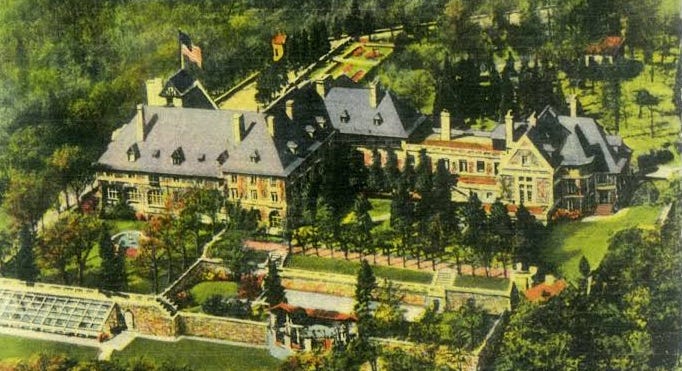
An hour north of New York City, in the Hudson Highlands, stands a large stone house called Arden. E.H. Harriman, the legendary railroad builder, spent years constructing it at the top of a mountain overlooking his estate and died in 1909, weeks after finally moving in. His son Averell grew up there.
Then in 1950, Averell and his brother Roland donated Arden House to Columbia University. Dwight Eisenhower, then Columbia’s president, made it the home of the American Assembly, which he had just founded: a forum where people from finance, industry, government, and academia would gather for a few days at a time, away from the news cycle, to deliberate on the large questions facing the country and the world. For decades, if you wanted to think seriously about how American strength gets built, there was a good chance you would find yourself around a table at Arden.
Pamela, who passed away in 1997 while in office in Paris, is buried at Arden, beside Averell. The glamorous US ambassador who first caught my attention as a French teenager, the savvy diplomat-financier whose career showed me what the work looks like, and the house where that work became an institution: Arden is the name that holds them all.
I also chose the name because it describes nothing. Arden locks this publication into no sector, no geography, no ideology. It leaves room for everything this letter will need to cover, from capital flows to factory floors, from Washington to Brussels to Shenzhen. What the name carries instead is a way of working: crossing between finance, industry, and statecraft as if they were one discipline, because they are; studying others up close in order to build at home; and investing in the Atlantic when the Atlantic is out of fashion.
Shakespeare’s forest, the Harriman estate, the forum where American strength was debated, and the place where Averell and Pamela rest: the name Arden is my way of committing to the attempt.
You’ll receive the newsletter in your inbox, as you received Drift Signal before it. Every edition will open free, with the deeper analysis reserved for paid subscribers, who fund this letter’s independence. The podcast interviews, which will resume soon in video/audio format, which Substack now enables, will be entirely free. Some editions will be short diagnostics, others long reports. All of them will pursue the same question: how the West learns to build again.
Three convictions will run through every edition: that the West has the capital and capacity to match China, but only if it acts as one allied system; that learning from rivals is a sign of seriousness, not weakness; and that the work of reconnecting American capital to European factories cannot wait for diplomats—it starts with investors, founders, and industrialists deciding to build together.
A newsletter about building as the West, while learning from China.
Welcome to The Arden Letter.

I’m very grateful to Brett Bivens, Marieke Flament, Demetri Kofinas, Armand Latreille, Herbert Mangesius, Christian Pfrang, Chris Schroeder, Laetitia Vitaud, Susan Walton, and Eleanor Warnock for the conversations that shaped this piece and their feedback on the draft.
From Normandy, France 🇫🇷
Nicolas
